6 September 2026
New project
Märklin Metall 10900 Cable Excavator
The conservation and restoration of a remarkable family-built model
Some projects are carefully chosen. Others simply find their way to you.
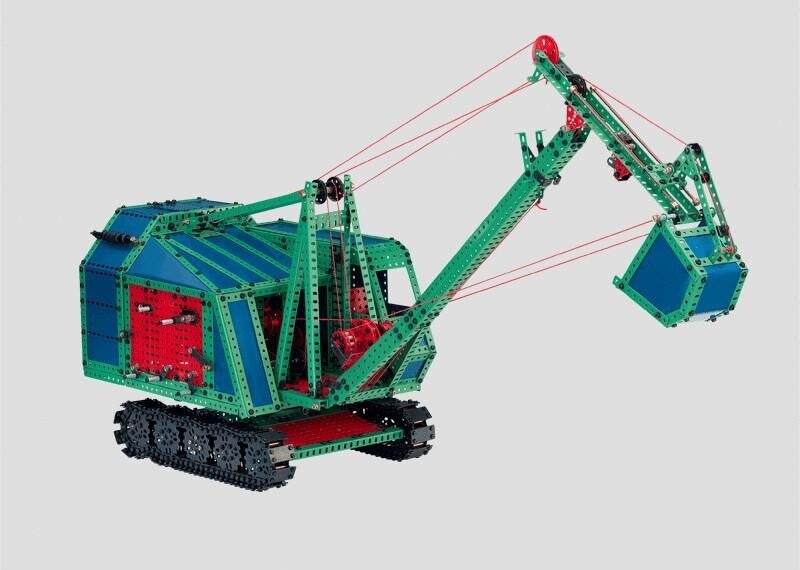
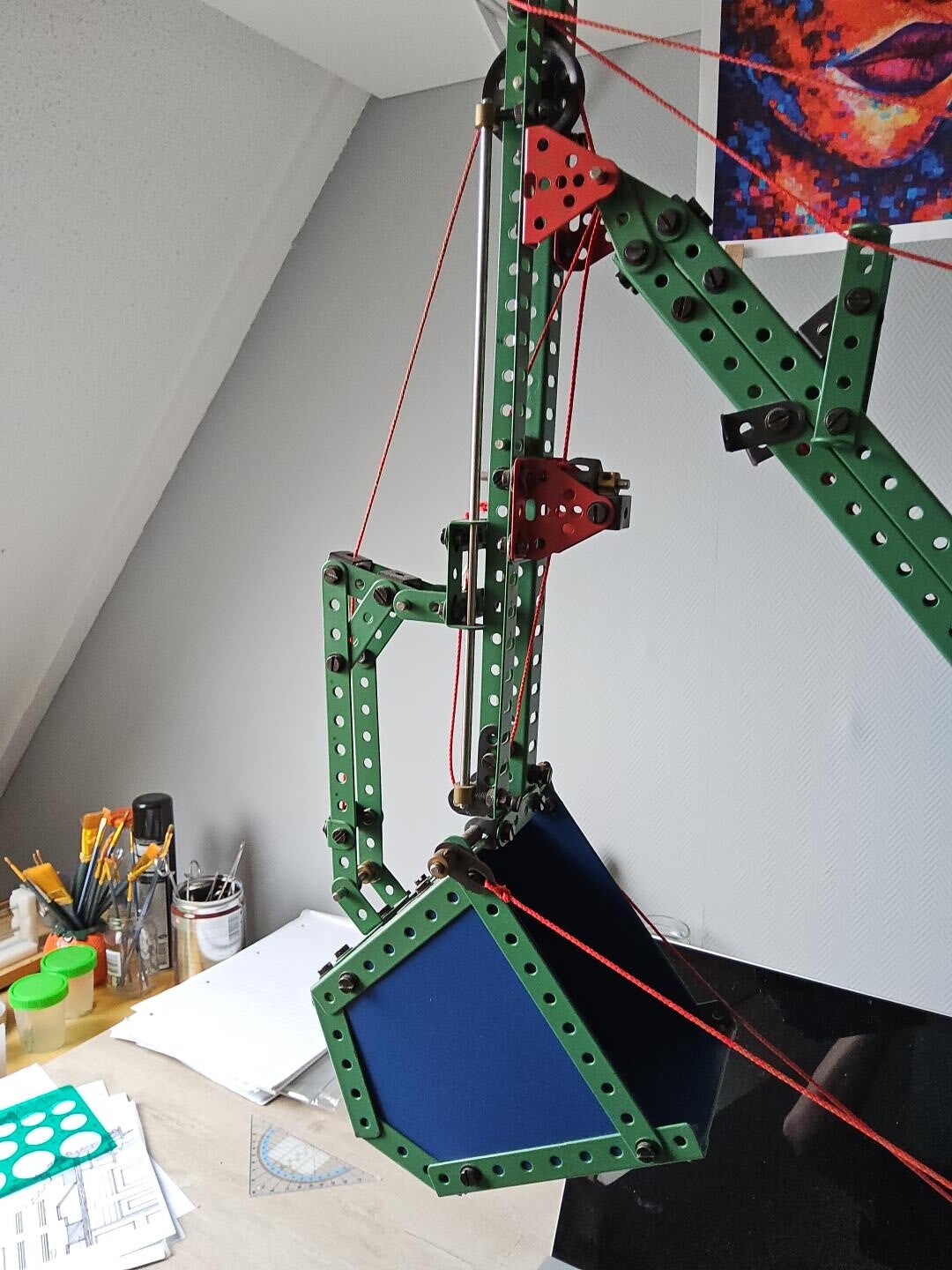
This large Märklin Metall 10900 Cable Excavator with Backhoe Bucket, originally known as the Seilbagger mit Tieflöffel, was built by my father many years ago. It has now come into my care and has earned its own place among my model-building projects.
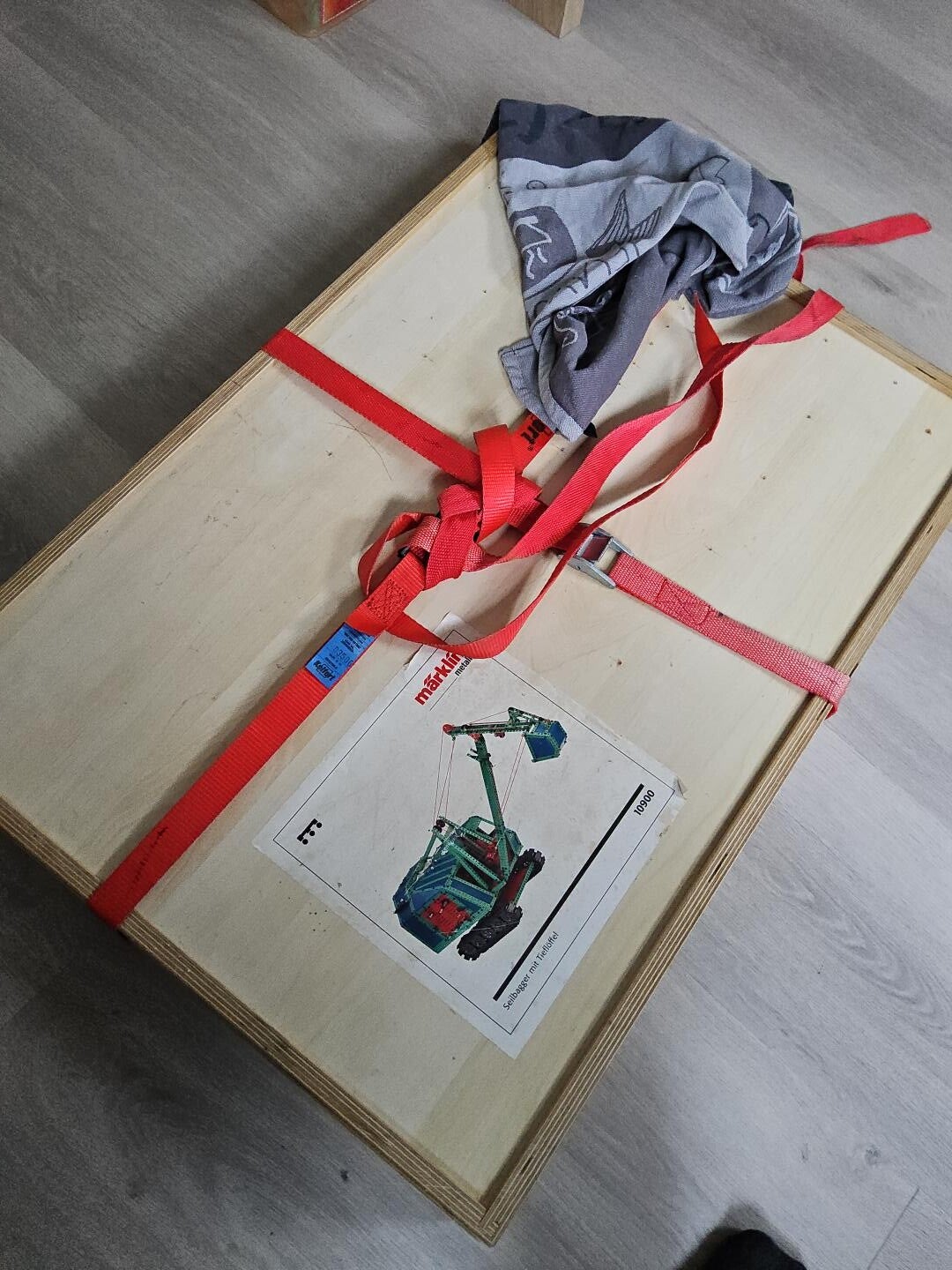
And it is certainly not a small model. The completed excavator alone is an impressive piece of metal construction. Together with its wooden storage case, documentation and a substantial collection of loose parts, the complete ensemble consists of many kilograms of metal.
My first impression was that I was facing a major restoration. Fortunately, a closer inspection revealed something rather different.
The starting condition
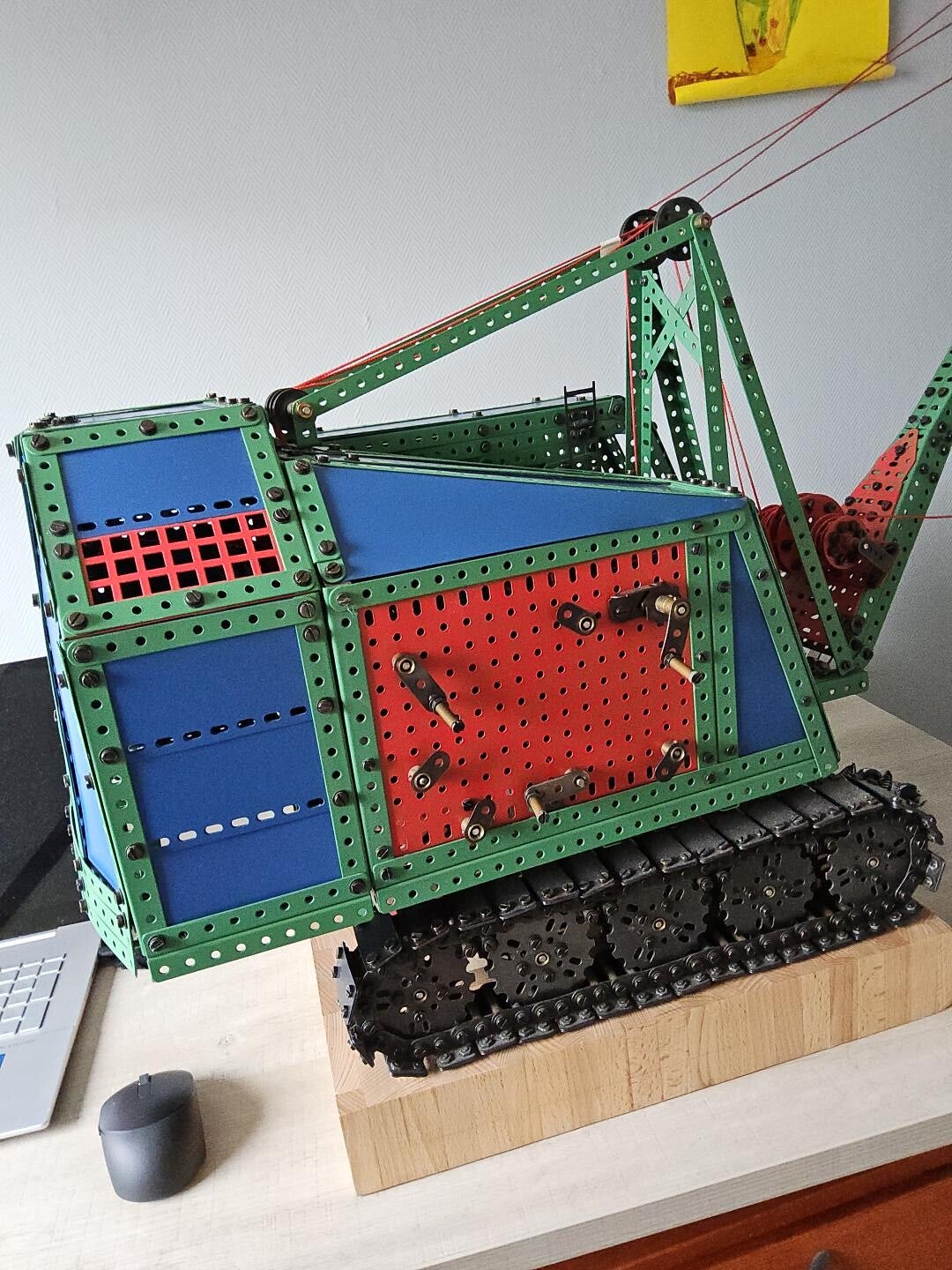
Considering its age, the excavator has survived remarkably well. Most of the original green, blue and red Märklin components remain in good condition, while corrosion is far less extensive than I initially expected.
That does not mean the machine is ready to operate.
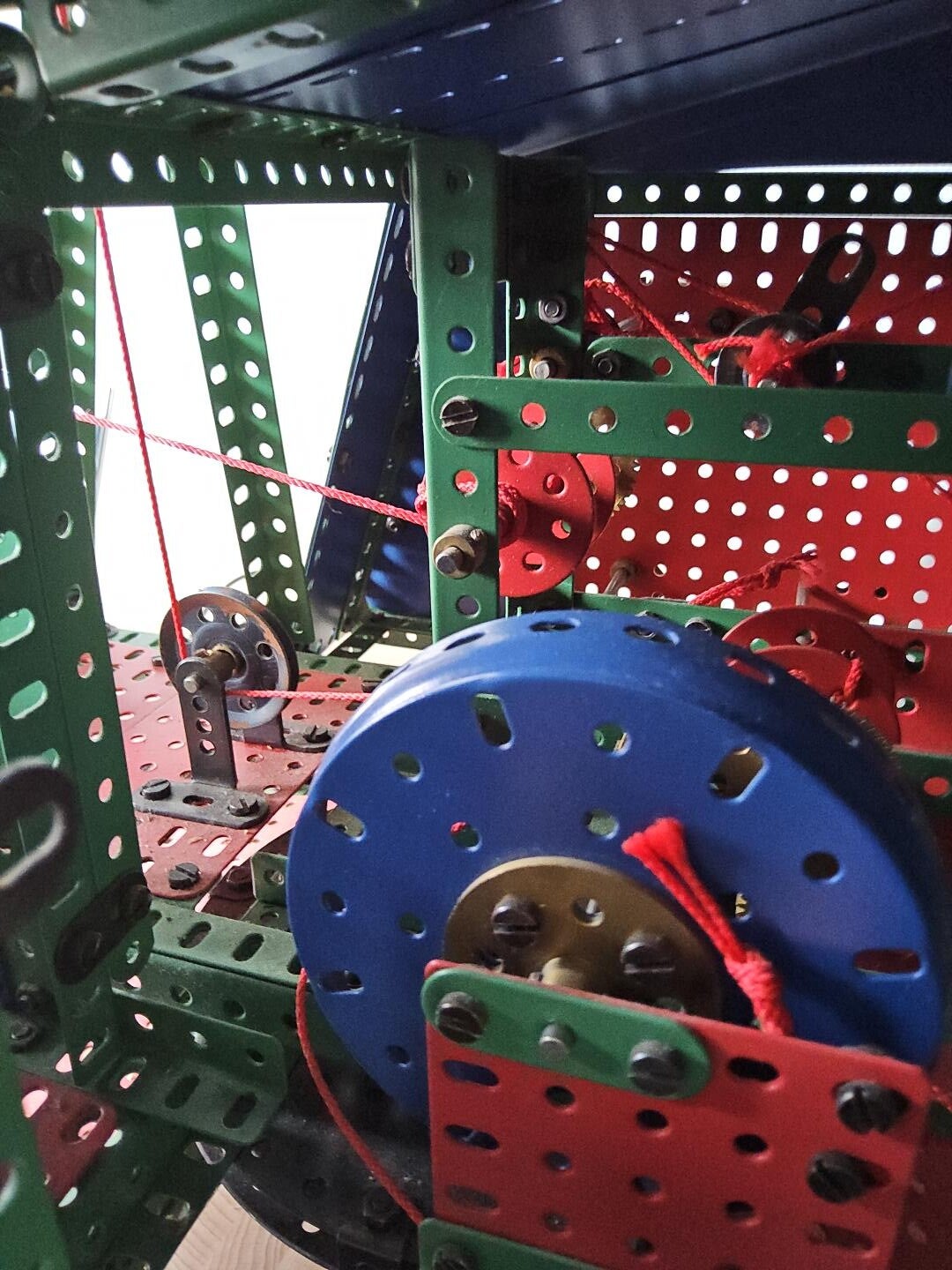
Both the exterior and the internal mechanisms require careful cleaning. The shafts, gears, drums, pulleys, bearings and crawler assemblies will all need to be inspected, adjusted where necessary and eventually lubricated correctly.
The lifting and operating ropes require particular attention. The existing ropes have clearly aged and show considerable wear in several places. Before any of them are removed, however, their complete routing will be photographed and documented in detail.
Restoration without erasing its history
With an old model such as this, there is always a temptation to dismantle everything, remove every trace of corrosion and make the entire machine look new again.
That is deliberately not the approach I intend to take.
My principle for this project is simple:
Preserve what is original and sound, repair what is necessary, and replace only what can no longer perform its function.
Signs of use and gentle ageing are part of the history of the model. Good original paintwork will therefore not be sanded or repainted simply to make the excavator appear new.
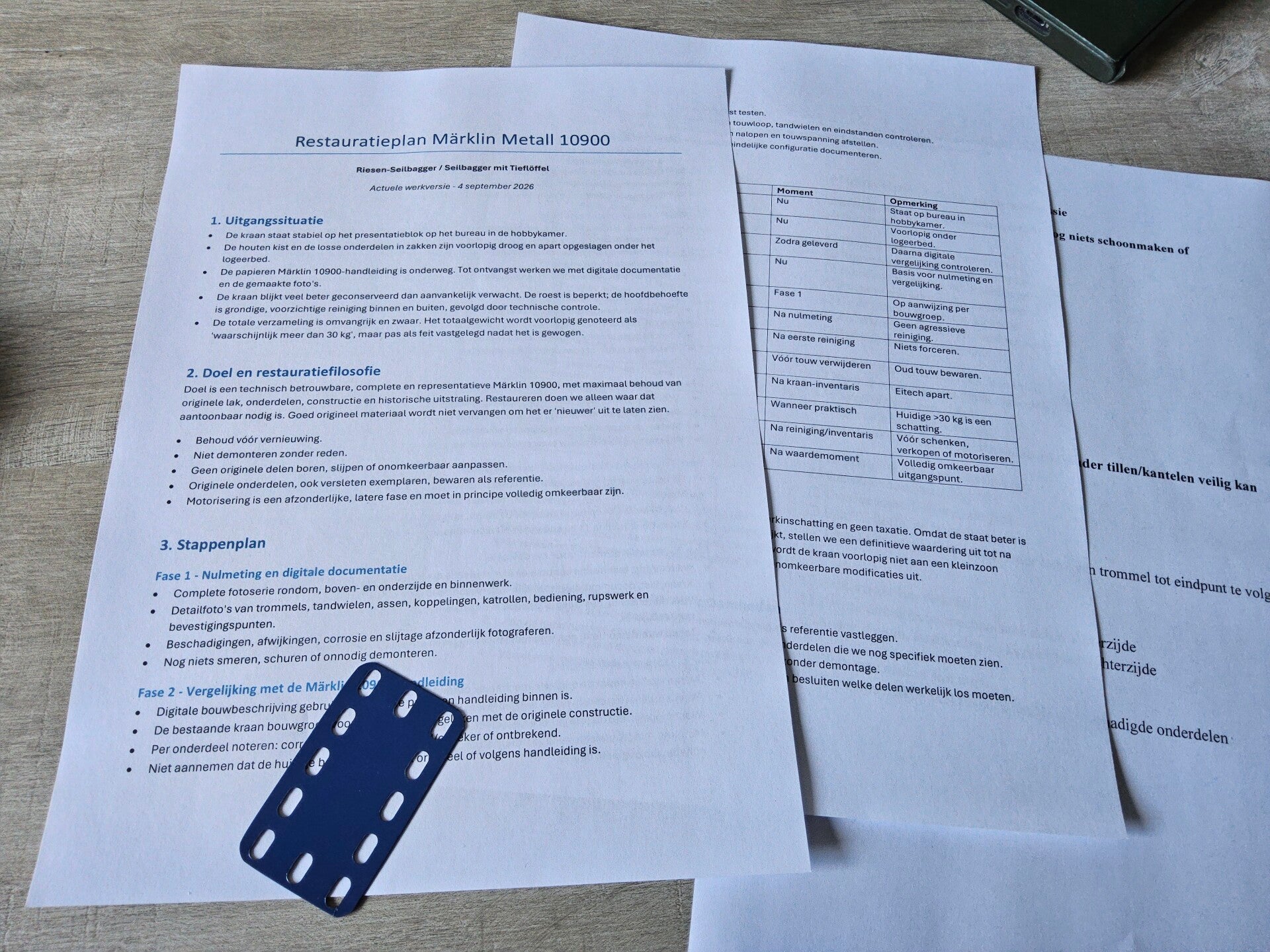
Nor will the complete machine automatically be dismantled. The existing construction will first be compared with the original Märklin documentation. Only then will I decide which components genuinely need to be removed for cleaning, inspection or repair.
Documentation comes first
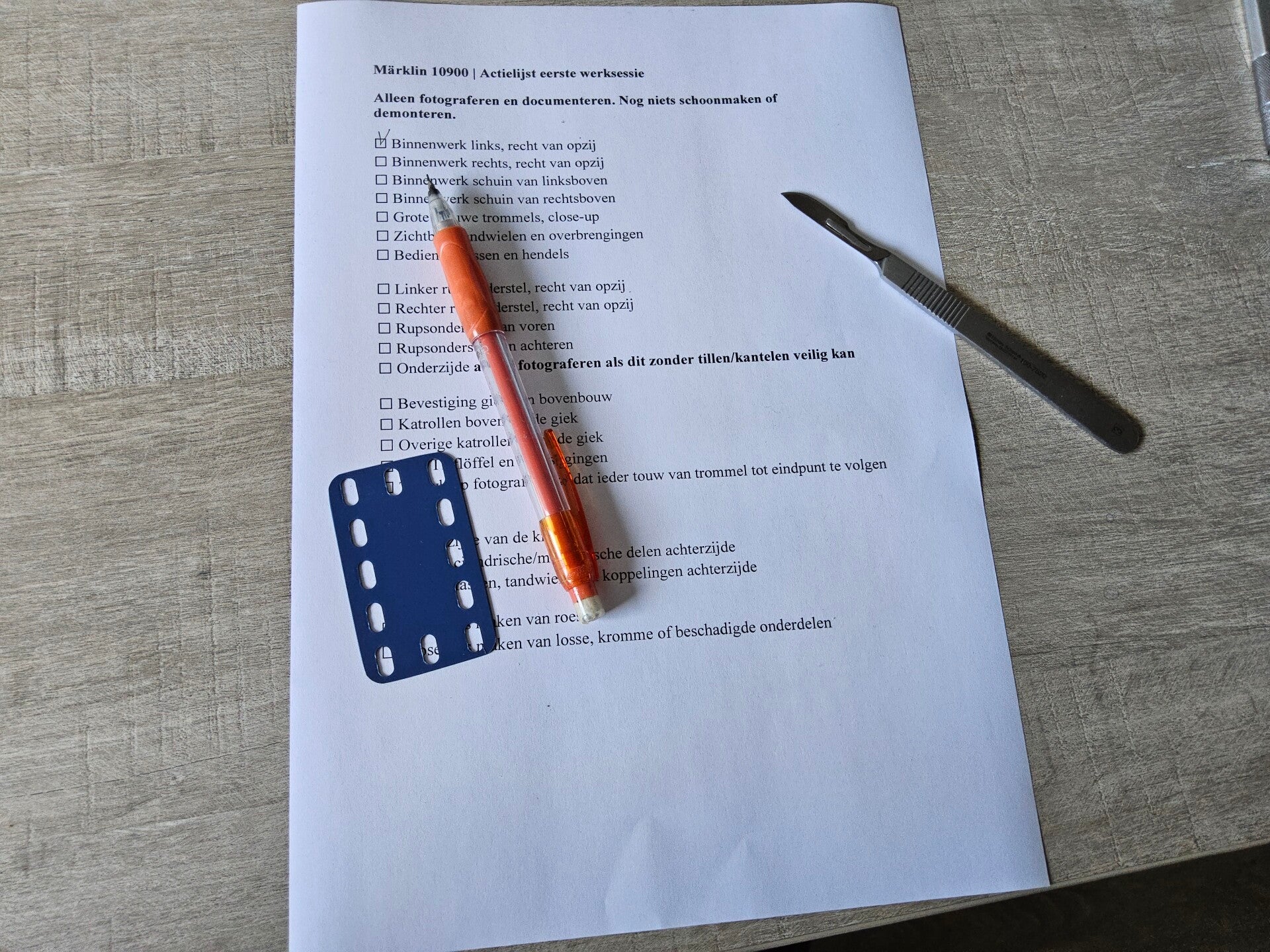
Before restoration work begins, the entire excavator will be systematically photographed.
This will include the internal mechanisms, drums, gear trains, controls, crawler assemblies, boom, pulleys and the complete routing of all ropes.
These photographs will form the baseline record for the project.
The existing machine will then be compared step by step with the original construction instructions for the Märklin Metall 10900.
This may reveal an interesting part of its history in its own right: whether my father followed the Märklin instructions exactly, or whether he introduced some engineering solutions of his own during construction.
An unexpected collection of spare parts
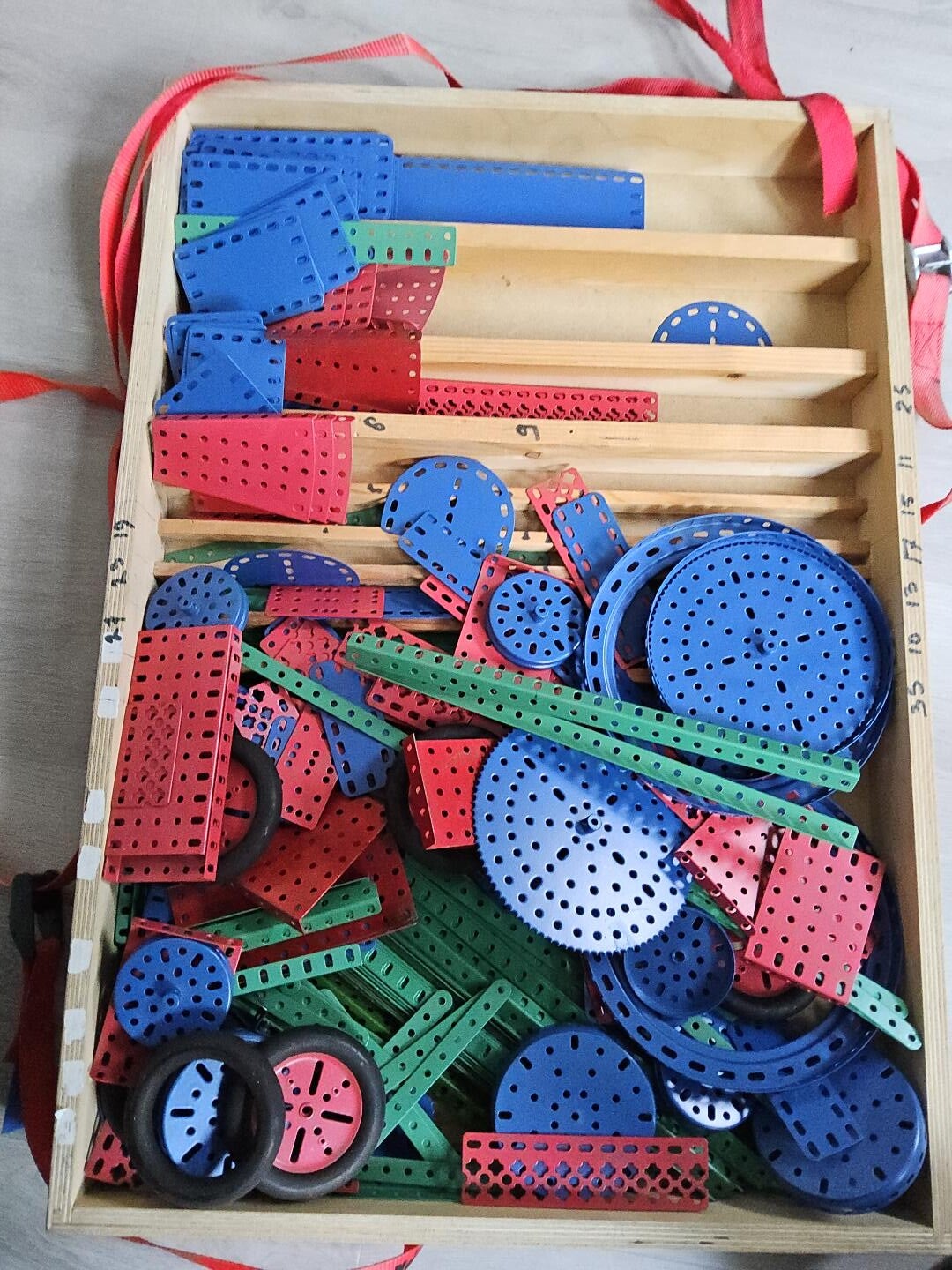
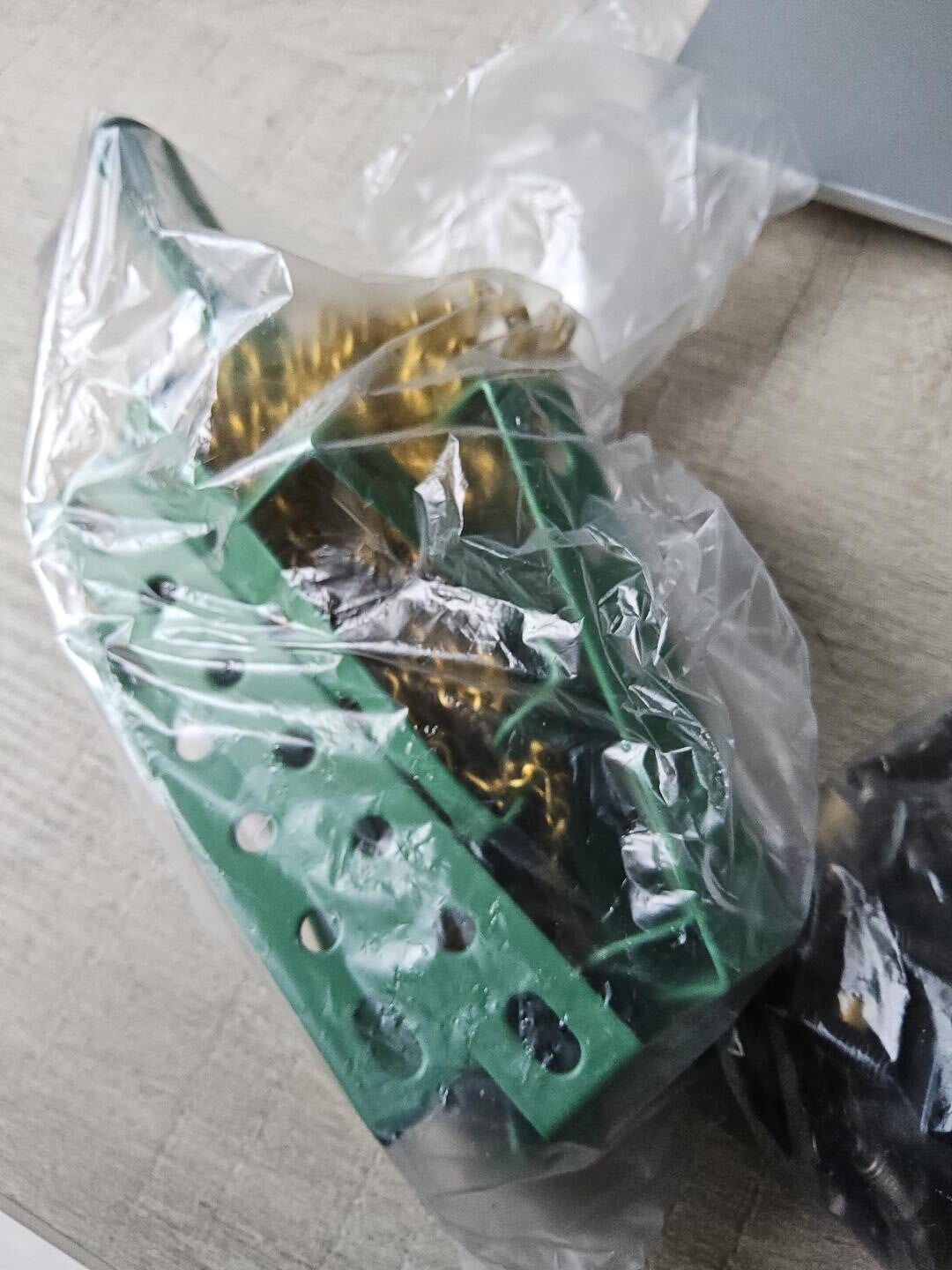
Along with the excavator, its wooden storage case has survived, containing a surprisingly large quantity of Märklin Metall components.
These include construction strips, angle sections, shafts, fasteners, wheels, pulleys, gears and numerous other mechanical parts.
This collection will also be catalogued, but only after the excavator itself has been inspected and I know which components, if any, are missing or require replacement.
Original parts will not simply be sacrificed for convenience or modified unnecessarily. Some components used in the 10900 were specific to this very large construction set and are therefore worth preserving in their own right.
There are also components from other metal construction systems among the material. These will be identified and kept separate from the Märklin restoration.
Cleaning and mechanical restoration
Once the documentation stage has been completed, the actual conservation work can begin.
The first operation will be careful dry cleaning. More thorough local cleaning will follow only where accumulated dirt, corrosion or old lubricants make it necessary.
The mechanisms can then be examined systematically.
Drums, gears, shafts, bearings, couplings, the slewing mechanism and crawler assemblies will eventually need to operate smoothly and reliably again.
Components will only be dismantled when there is a specific mechanical or conservation reason to do so.
The old ropes will remain in position until every route has been completely recorded. Once removed, they will be retained with the project as reference material rather than simply discarded.
And perhaps some motors...
At present, the excavator has no electric motors.
Once the original mechanisms have been inspected, restored and proven to operate correctly by hand, I intend to investigate whether some of its functions could be motorised.
There is one important condition:
Any motorisation should be as reversible as reasonably possible.
Original plates will not be drilled and original components will not be cut simply to accommodate modern motors. Wherever possible, existing mounting holes and Märklin construction components will be used.
Modern motors and control electronics may eventually be hidden inside the machine, but the original Märklin construction should remain intact.
Whether motorisation will actually be carried out will only be decided after the excavator has been restored to proper mechanical working order.
A project without a deadline
The Märklin 10900 is deliberately not a project with a completion date.
My principal model-building project remains the fully scratch-built HMS Victory. The cable excavator will run alongside it as an indoor project for days when cold or poor weather makes working comfortably in the workshop less attractive.
The restoration can therefore proceed in small and manageable stages, without any pressure to finish it quickly.
On these pages I will document that process, from the condition in which the excavator came into my possession through cleaning, investigation and mechanical restoration, and perhaps eventually to a carefully designed motorised version.
Why preserve this particular machine?
Ultimately, this project is about more than an unusual Märklin construction set.
My father built this machine.
The excavator as it stands today represents the many hours he spent assembling it and the decisions he made along the way. Small deviations, signs of use and even imperfections may therefore tell part of its story.
That is precisely why I do not want to restore its history away.
The aim is not to create a Märklin 10900 that looks as though it left the factory yesterday. The aim is to preserve my father's Märklin 10900 and return it to sound mechanical condition.
That distinction will guide every decision made during the restoration.
And so this large, heavy and slightly unexpected collection of metal has earned its own place among my model-building projects.